Pro-MOTe Legacy: Why Annual MOTs Still Matter in 2025
This feature looks back at the Pro-MOTe campaign, which fought in 2011–12 to protect the UK’s annual MOT test. Backed by motoring groups, charities, and insurers, the campaign argued that reducing test frequency would mean more unsafe cars on the road.
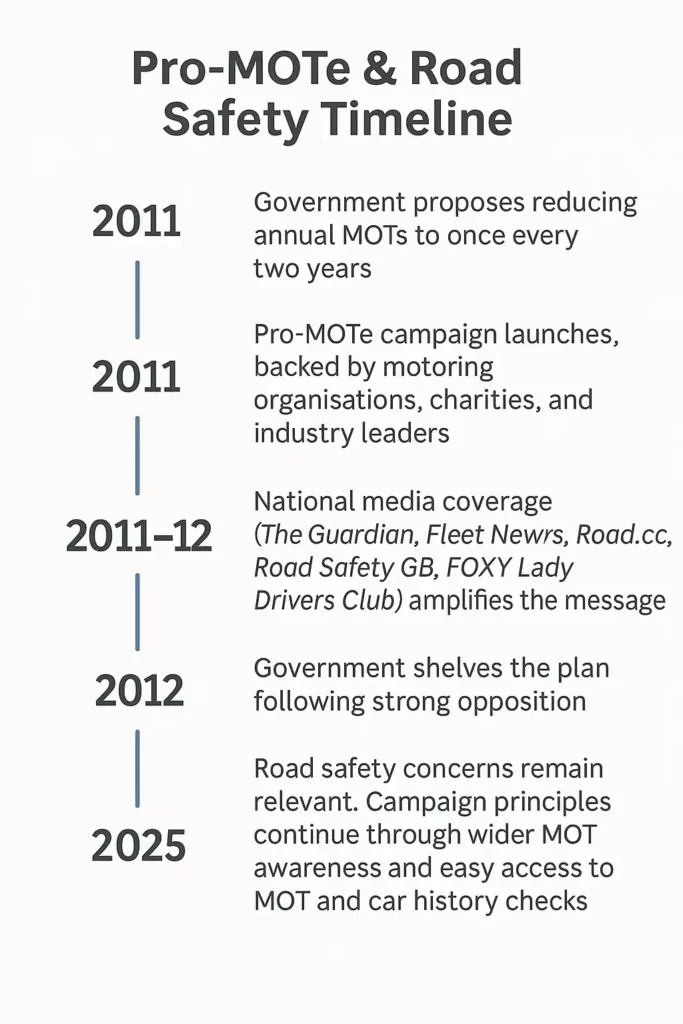
Back in 2011, the government floated what seemed like a simple idea: cut the frequency of MOT tests from once a year to once every two years. Ministers claimed it would “reduce the burden on motorists.”
But to many, it was a dangerous gamble. Road safety experts, insurers, garages and motoring organisations warned it could lead to more accidents, higher costs, and unsafe cars slipping through the cracks.
That battle gave rise to Pro-MOTe, a national campaign determined to defend Britain’s annual MOT. Fourteen years on, with road safety still under scrutiny, its message feels as urgent as ever.
At RegPlateCheck.co.uk, we continue that legacy. By offering MOT checks, car history checks and full vehicle history reports, we give today’s motorists the tools to make safer choices.
The Birth of a Campaign
Launched in October 2011, Pro-MOTe was coordinated by Bill Duffy, then CEO of Halfords Autocentres. Its backers included the RAC, AA, Brake, Road Safety GB and leading insurers.
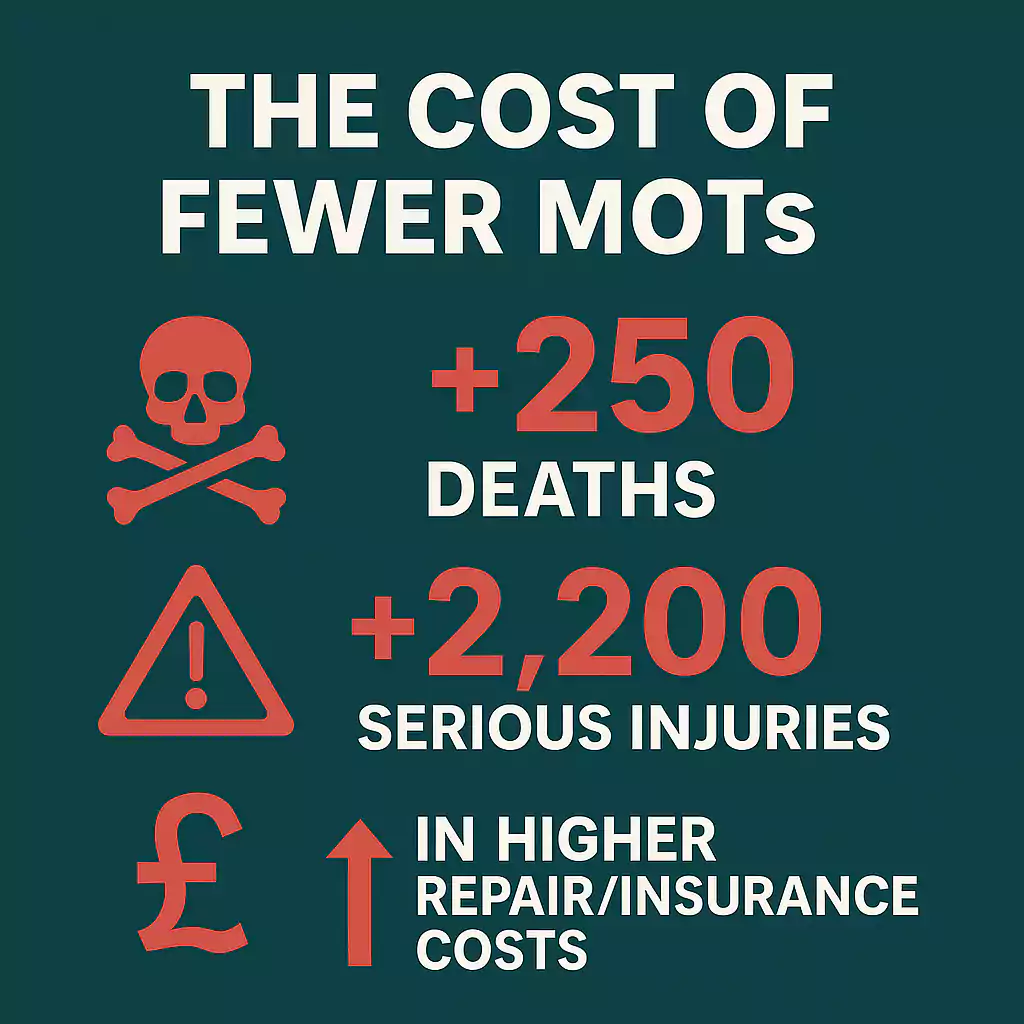
Their concern was simple: fewer MOTs meant more defective cars on the road. The Department for Transport’s own modelling showed the risk — up to 2,200 more serious injuries and as many as 250 additional deaths every year.
As Duffy wrote in The Guardian:
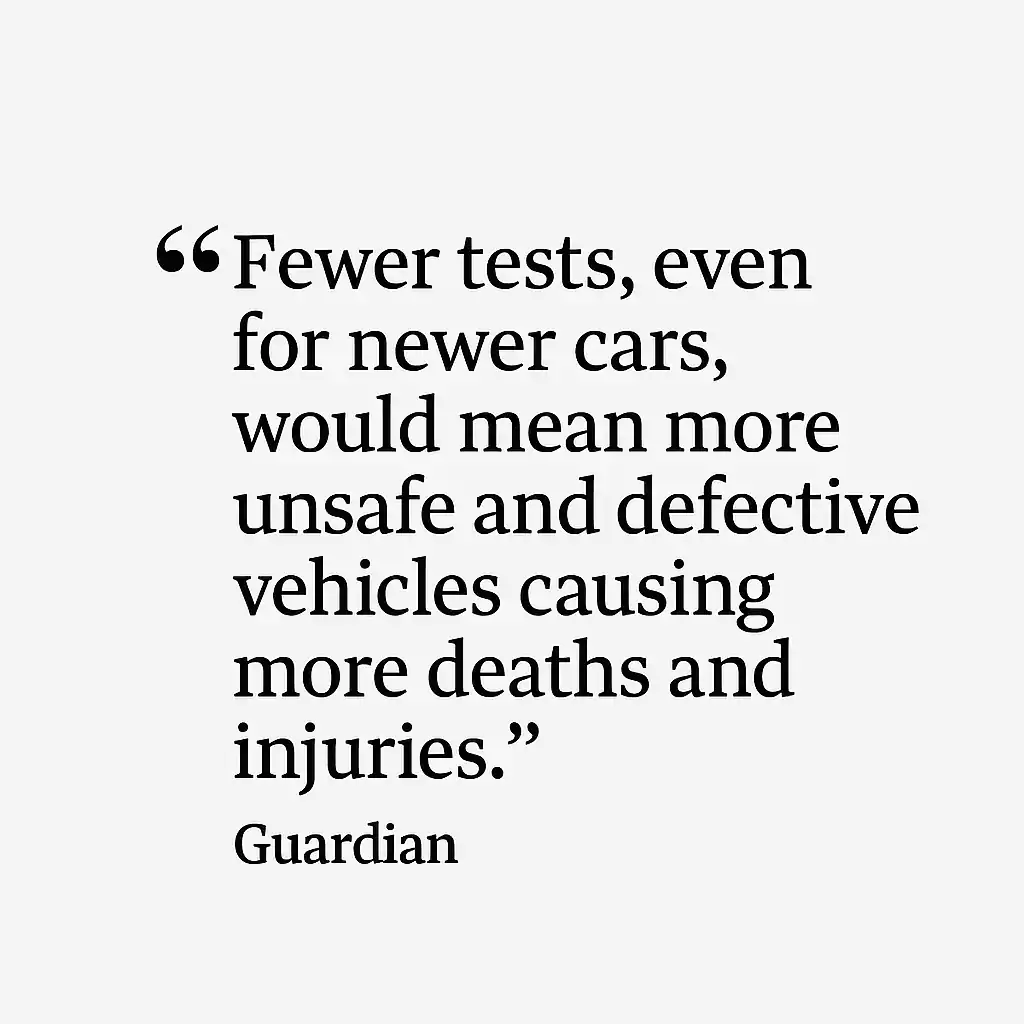
“The danger – quite apart from the increased burden of extra repair and insurance costs – is that fewer tests, even for newer cars, would mean more unsafe and defective vehicles causing more deaths and injuries.”
The stakes couldn’t have been clearer.
Headlines Across the Country
Pro-MOTe quickly made its way into the national conversation.
- Fleet News announced the campaign’s launch, warning that reducing MOT frequency could be disastrous.
- Road.cc called the proposal “insane,” quoting campaigners who argued it risked lives.
- Road Safety GB highlighted DfT statistics predicting up to 3,000 additional deaths or injuries if the rules changed.
- FOXY Lady Drivers Club threw its support behind the campaign, noting that scrapping annual MOTs would hurt families and increase costs for ordinary drivers.
The breadth of voices gave the campaign credibility. It wasn’t just garages defending business. It was a coalition of experts, charities, and consumer groups speaking with one voice.
Why the Annual MOT Still Matters in 2025
The government eventually backed down. Annual MOTs remain the law. Yet the issues raised in 2011 are just as relevant today:
- One in three cars still fails its MOT first time. Extending the gap would only make that worse.
- Mileage varies wildly. A company car doing 30,000 miles a year can’t wait two years for safety checks.
- Safety components wear fast. Tyres, brakes and suspension don’t give motorists two years’ grace.
As one safety campaigner told Fleet News back then:
“Cutting MOTs isn’t cutting red tape — it’s cutting safety nets.”
MOT Records as a Window into Car History
One of the campaign’s overlooked points was transparency. MOTs don’t just keep cars roadworthy; they also build a paper trail.
Every MOT record tells a story. Past failures, advisories, mileage discrepancies — together they form the backbone of a vehicle history report. For anyone buying a second-hand car, that history is essential.
That’s why RegPlateCheck exists. By running a quick MOT check or a car history check, drivers can:
- Spot patterns of neglect.
- Confirm mileage is genuine.
- Avoid cars with recurring defects.
- Make safer, better-informed decisions.
A Coalition That Made a Difference
Pro-MOTe succeeded because it brought diverse voices together:
- AA and RAC, trusted motoring names.
- Brake, campaigning tirelessly for safer roads.
- Halfords Autocentres, speaking for the repair trade.
- Road Safety GB, representing experts in policy and education.
- Insurers and consumer groups, highlighting the financial consequences of more accidents.
Together, they forced ministers to shelve a policy that could have cost thousands of lives.
Lessons for Drivers Today
The story doesn’t end with Pro-MOTe. It leaves lessons for today’s motorists:
- Don’t skip the basics. Even with an MOT certificate, check the history.
- Watch advisories. Repeated tyre, brake or suspension warnings are red flags.
- Mileage checks matter. An MOT record is one of the best defences against clocking.
- Small costs, big savings. A £40 MOT or a low-cost vehicle history report can prevent financial disaster later.
What Drivers Can Do Now
If you’re looking at a used car in 2025, here’s your checklist:
- Run a free MOT check using its number plate.
- Read through past failures and advisories carefully.
- Cross-check mileage to spot inconsistencies.
- For full peace of mind, get a vehicle history report — including accident, write-off, and finance data.
Conclusion
The Pro-MOTe campaign proved that road safety can’t be taken for granted. By standing firm, it protected Britain’s annual MOT — and with it, countless lives.
At RegPlateCheck, we’re proud to carry that message forward. Every MOT check, every car history check, every vehicle history report is part of the same mission: keeping unsafe cars off the road and Britain’s motorists safe.